Recombinant Human CD96 protein (rFc Tag)
种属
Human
纯度
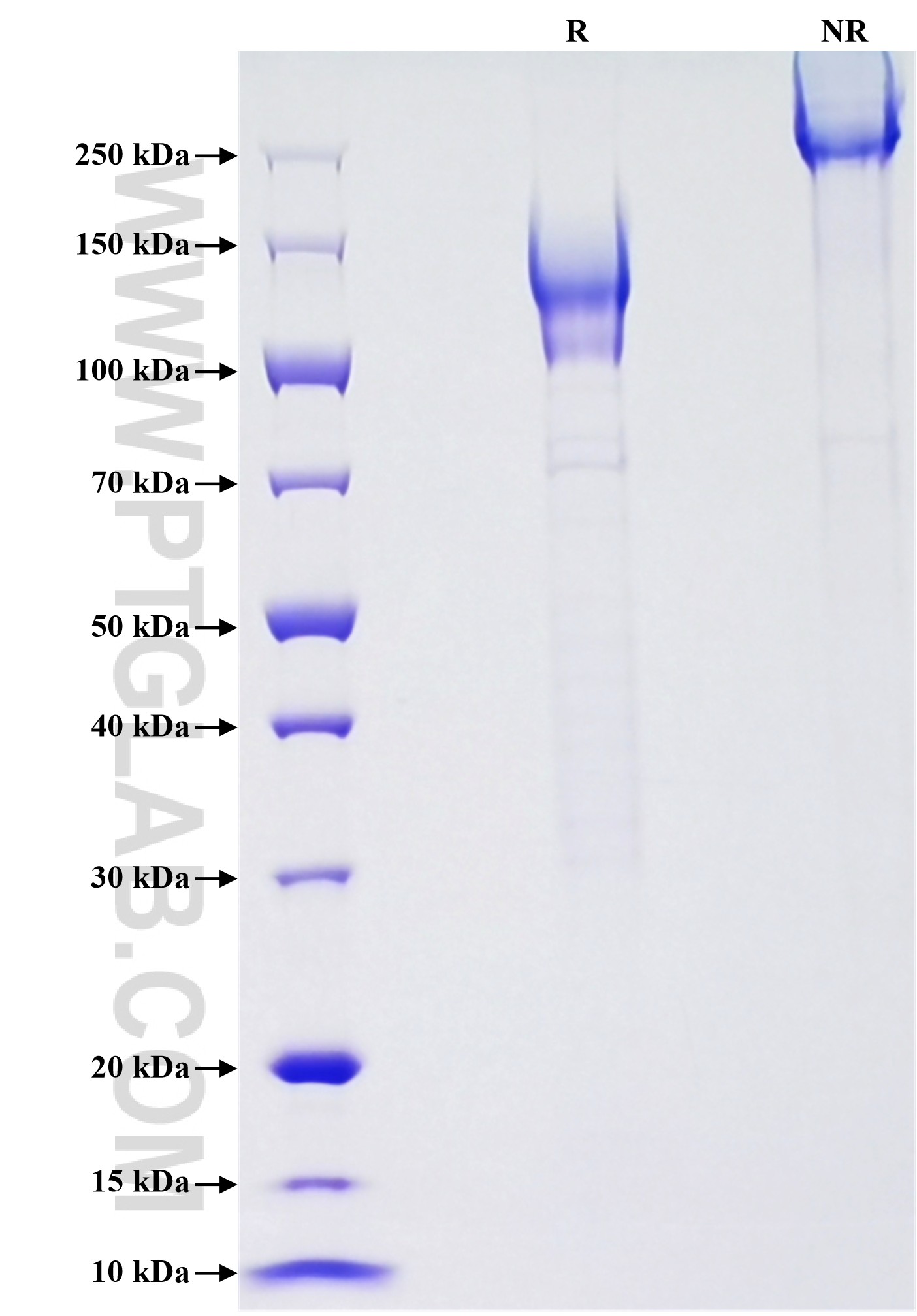
>90 %, SDS-PAGE
标签
rFc Tag
生物活性
未测试
验证数据展示
产品信息
| 纯度 | >90 %, SDS-PAGE |
| 内毒素 | <0.1 EU/μg protein, LAL method |
| 生物活性 |
Not tested |
| 来源 | HEK293-derived Human CD96 protein Val22-Met503 (Accession# P40200-2) with a rabbit IgG Fc tag at the C-terminus. |
| 基因ID | 10225 |
| 蛋白编号 | P40200-2 |
| 预测分子量 | 79.8 kDa |
| SDS-PAGE | 100-160 kDa, reducing (R) conditions |
| 组分 | Lyophilized from 0.22 μm filtered solution in PBS, pH 7.4. Normally 5% trehalose and 5% mannitol are added as protectants before lyophilization. |
| 复溶 | Briefly centrifuge the tube before opening. Reconstitute at 0.1-0.5 mg/mL in sterile water. |
| 储存条件 |
It is recommended that the protein be aliquoted for optimal storage. Avoid repeated freeze-thaw cycles.
|
| 运输条件 | The product is shipped at ambient temperature. Upon receipt, store it immediately at the recommended temperature. |
背景信息
CD96 is a type I transmembrane protein expressed on the surface of natural killer cells and activated T cells, belonging to the immunoglobulin superfamily. As a crucial inhibitory immune checkpoint receptor, it primarily binds to its ligand CD155 (PVR), transmitting inhibitory signals that negatively regulate the cytotoxicity and cytokine secretion functions of NK cells and T cells. In the tumor microenvironment, the high expression of CD155 on tumor cells continuously activates the CD96 pathway, leading to exhaustion of immune cell function and thereby promoting tumor immune escape. Consequently, CD96 has emerged as a promising novel target in the field of tumor immunotherapy, with specific antagonistic antibodies currently in preclinical and early-stage clinical research.
参考文献:
1. Feng, Shikai et al. International journal of molecular sciences vol. 24,2 (2023) : 1303.
2. Chai, Jiaqi et al. European journal of gastroenterology & hepatology vol. 37,5 (2025): 534-539.
3. Ohtsuki, Shozo et al. Cell reports. Medicine vol. 4,4 (2023): 101012.
4. Qian, Da et al. Annals of medicine vol. 57,1 (2025): 2588717.